Social Amnesia: The Adaptation Knowledge African Food Systems Cannot Afford to Lose
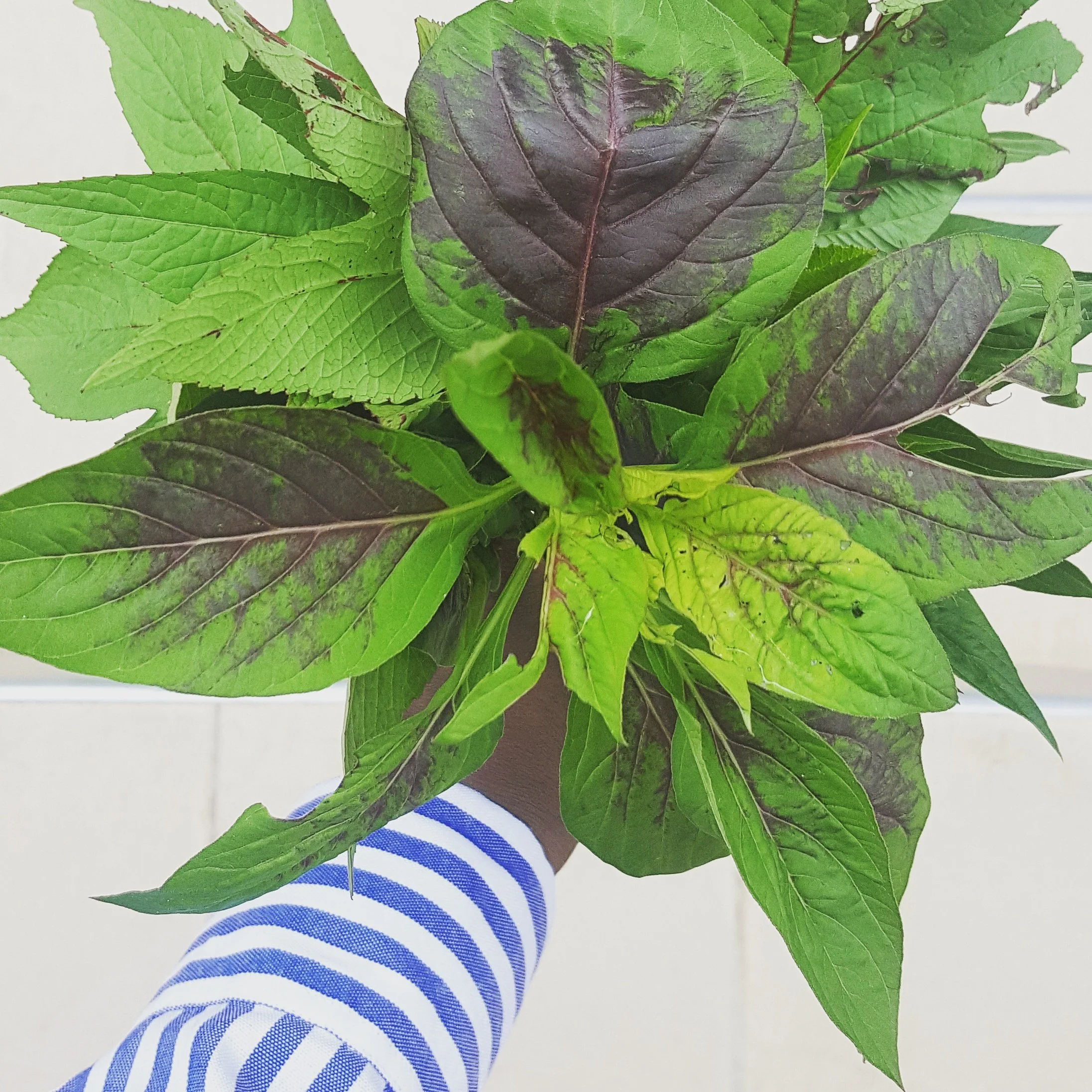
A field case for treating community-held crisis knowledge as strategic infrastructure.
The most valuable asset in a resilient food system is not a seed bank, a warehouse, or a supply contract. It is the memory a community holds of the last time the system ruptured, and what it did to feed itself while the rupture was in progress.
That memory is being systematically discarded.
I have spent over a decade working in humanitarian emergency response. What I saw, again and again, was that communities under pressure produce brilliant, specific adaptations. A dish made from ingredients no one thought to eat. A preservation technique nobody documented. A fishing rhythm that lets stock recover. Then the pressure lifts. The good years return. And the community actively removes the adaptation from circulation because it now reads as a marker of the hard time.
This is social amnesia. It is one of the largest under-recognized risks in African food security planning.
What the bean leaves story reveals about the discard mechanism
In the early 1980s, Ghana went through a food insecurity crisis. Communities got creative. In one such community, people started using the leaves of bean plants, until then discarded, ground fine and blended with cornmeal to make a dish extremely high in iron. It fed families through the worst of it.
Then, when the crisis ended, the dish was dropped. Not because the ingredients became scarce. Not because it stopped being nutritionally sound. Because eating it was associated with the memory of hunger, and the community wanted to close the chapter on that memory.
This is the mechanism I want food systems planners to understand: the discard is emotional, and can be final. The recipe does not sit in a cookbook waiting to be revived. It exits circulation. The next generation does not learn to make it. Within one generation, the knowledge is gone.
Why the discard is a structural risk, not a cultural quirk
Climate models make it clear that food system ruptures on the continent are going to become more frequent, more severe, and more geographically distributed. The Sahel has been running its adaptation script under drought conditions for generations. Coastal West Africa is now beginning to run scripts of its own as rainfall patterns shift, crop diseases move, and water access changes.
Every one of these ruptures produces adaptation knowledge. Every good year that follows is a discard event.
If African food security planning treats these adaptation cycles as background noise rather than as the primary knowledge system a resilience strategy should be built on, the continent will spend the next three decades relearning what its own communities already know. And paying international consultants for the privilege.
The Sahelian household is not a case study in vulnerability. It is a case study in a working system. The women in those households are the ones I want in the room when the World Bank next convenes a climate-smart agriculture strategy consultation.
What a food systems strategist looks for that a sustainability consultant does not
A sustainability consultant will ask what the community grows and how it is sold.
A food systems strategist asks what the community grew during the last drought, and where that knowledge is stored now. Who holds it. Whether the next generation is being taught it. Whether it has already been shamed off the table.
The proximity-to-origin difference is not credentialing. It is a method. You cannot ask that question through a survey instrument. You have to sit in the kitchen with the woman whose hands remember.
Institutional implications
For cocoa buyers and origin brands:
The adaptation your farming communities made during the last price collapse is knowledge you can now bank against the next one. Fund the documentation. More importantly, fund the transmission.
Assume anything sitting under a "we don't do that anymore" is exactly what the resilience strategy needs. The dishes and practices that carry shame are the ones that carried the community through.
For development finance:
Redirect a portion of climate-smart agriculture budget from imported technical assistance to intergenerational knowledge transfer at the household level. The cost per household is a fraction of a consultancy day rate.
Fund the elders. Fund the women. The knowledge is with them. It will not be with them for much longer.
For cultural and heritage institutions:
A food heritage program that only preserves the celebratory foods will preserve the wrong material. Feast foods survive on their own. Crisis foods do not.
The dishes that appear during the hard years are the ones that need documentation and rehabilitation from shame. That is a heritage brief nobody is currently holding.
Call Forward
If you are commissioning research, building a resilience strategy, or funding a cultural heritage initiative on the continent and you want to know what proximity-to-origin methodology looks like applied to your specific question, this is the conversation I do.
👉🏾 Work with me
The full letter this piece is drawn from is here: Substack