I Don't Want to Be Dramatic About It
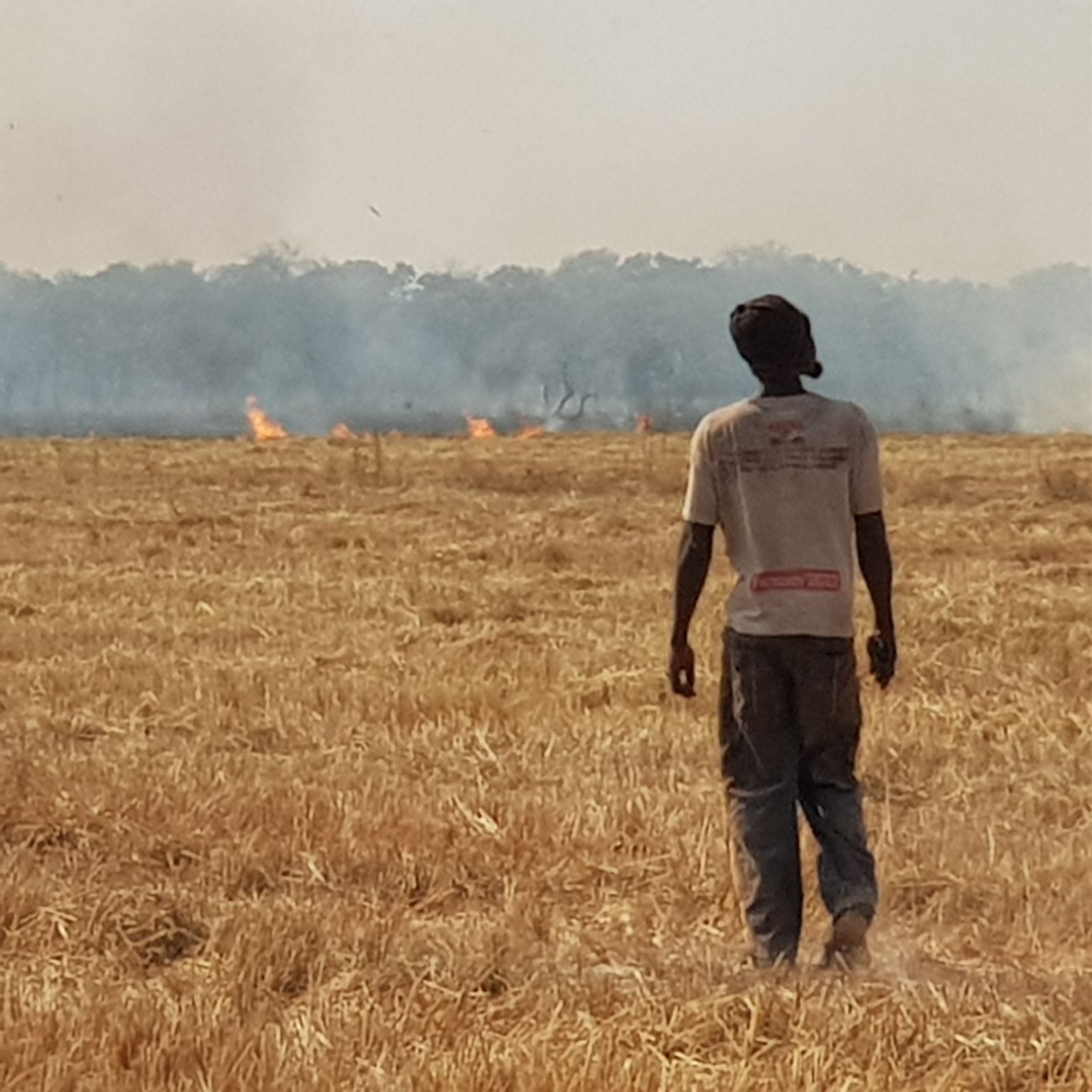
A note on displacement, cocoa, and why institutions keep treating one broken system as three.
The industry has a habit of reading African food systems as separate problems. Humanitarian response holds displacement. Gastronomy and cultural policy hold traditional knowledge. Cocoa sits with commodity desks, and food sovereignty with development finance and academic institutions.
Communities don’t experience these as four problems. They experience one.
A coup or a climate shock displaces a household, and the food knowledge that woman carried in her hands moves with her, or it dies. Traditional cooking gets undervalued at the national level, and the smallholder who supplies its ingredients stops planting. Beans leave Ghana. Finished chocolate returns to Ghana at many times the origin value. The household maths for that farmer's children stops adding up, and the next generation leaves. That is one system, breaking in different rooms.
I have moved through four professional frames in twenty years. Humanitarian response. Chef. Chocolatier. Food systems strategist. The instinct behind all four was the same: locate the fracture, and fix what could be fixed from where I was standing. The fractures were never four different problems. They were the same fault line, surfacing in whichever room I happened to be sitting in.
The fragmentation problem
Fragmentation is not neutral. When development finance treats cocoa as a commodity problem and farmer welfare as a separate social investment, the two lines never meet in the budget. Cultural institutions that treat African food as heritage tend to bracket off the smallholder economics that produce the ingredients, handling those elsewhere or not at all. Each frame is internally coherent. Together, they miss the community.
The same household appears in four datasets, handled by four institutions, and none of the interventions add up to a functioning system for that household.
The median farmer as a systems indicator
The median age of a Ghanaian cocoa farmer is 55. This is not a demographic curiosity. It is the clearest signal in the sector that the underlying economics do not work at origin. Children of cocoa farmers have run the numbers and are leaving, not because they lack the skill to farm, but because the price paid at origin does not support a household or a plausible future.
An integrated frame reads that number as a supply risk indicator, a food sovereignty question, and a cultural inheritance question, all at once. A commodity desk sees a price and a tonnage. A systems view sees a countdown with a clear end date.
What integrated framing looks like in practice
It prices origin against the age of the farmer, not only the tonne. It treats traditional food knowledge as production infrastructure rather than heritage decoration. It treats displacement and food sovereignty as one file, because in the household they already are one file.
That changes what gets funded, what gets audited, and who is in the room when strategy is set.
Institutional implications
▸ For cocoa buyers and ESG leads: median farmer age belongs on the risk dashboard alongside price and volume. An aging origin without replacement is not a stable supply, whatever this quarter's tonnage report says.
▸ For development finance: displacement portfolios and food sovereignty portfolios should share a desk. The knowledge lost during displacement is the same knowledge development finance later tries to restore, at far higher cost.
▸ For cultural institutions: African food knowledge is not a heritage collection. It is a living production system whose custodians are aging out of it in real time.
Call Forward
The through-line was never a story about a career. It describes how one system breaks in different rooms, and how the instinct to fix it can carry across professional frames without fragmenting. If your institution is sitting with one of these fractures, that is the conversation I do.
👉🏾 Work with me.
For the weekly letter on food, inheritance, and value at origin: Substack