Proximity to Origin: Food Systems Strategy vs. Sustainability Consulting
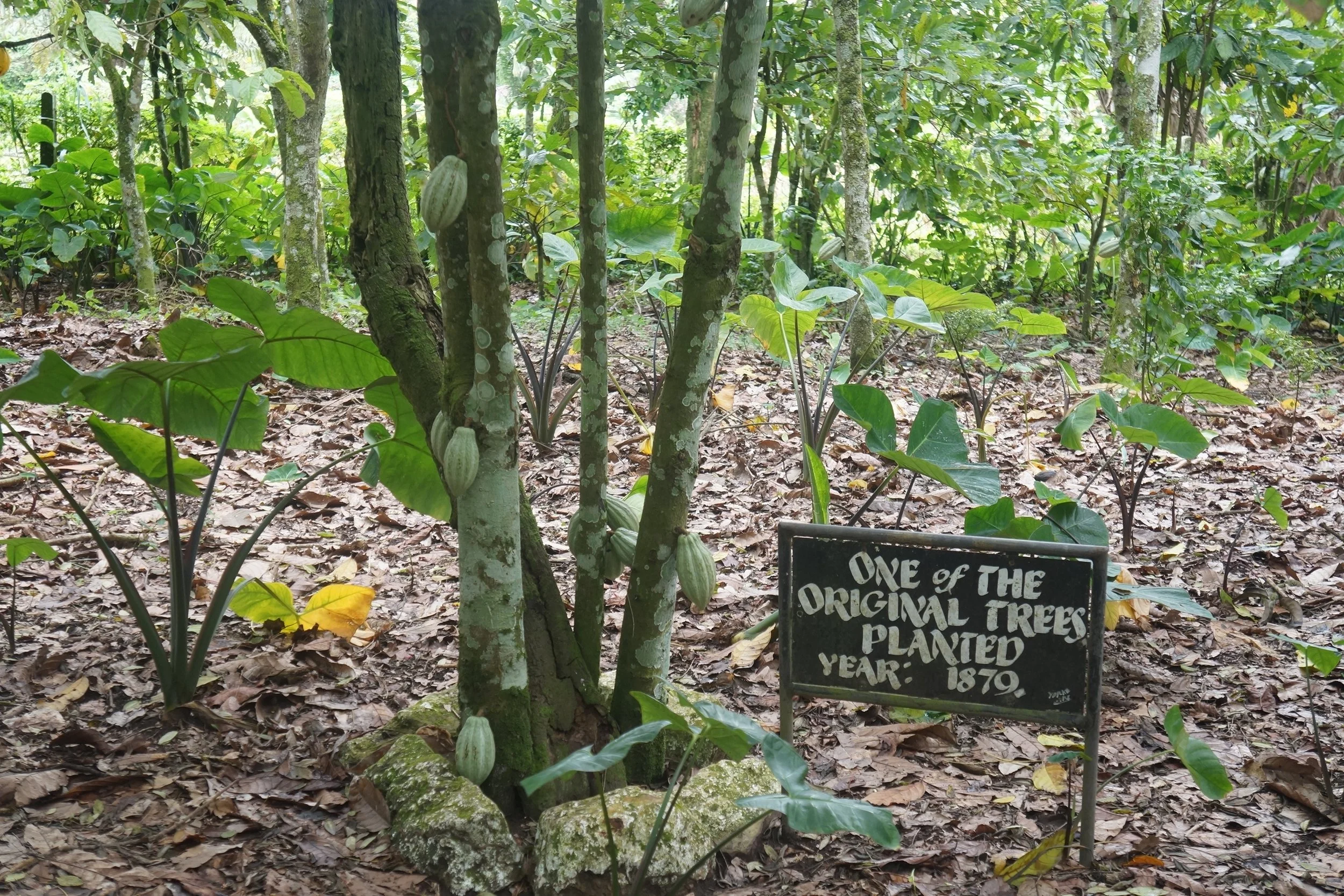
Keeping a crop alive is not the same as keeping a system honest.
The average Ghanaian cocoa farmer is in their late fifties. Roughly 800,000 people are holding up an export sector that generates billions downstream, and the succession pipeline behind them is thin to the point of absence. Every serious sustainability program in cocoa knows this number. Very few are structured to do anything about it, because the mandate they were given was to protect the crop, not the system the crop sits inside.
That distinction is the difference between food systems strategy and sustainability consulting. It is not credentials. It is proximity to origin.
One Crop, Kept Alive
A sustainability consultant is engaged to make sure one thing does not crash. Take coffee. The world has already decided that coffee is valuable, so the work becomes finding ways to do coffee a bit better, so that we can continue to have coffee. Certification, traceability, yield improvement, emissions accounting. Real work, much of it well executed.
But the system may already be flawed, and the effort goes into forcing an imbalance to be slightly more balanced without ever examining what produced the imbalance. The frame is the commodity. Everything else in the landscape becomes noise, or someone else's brief.
Food systems strategy starts a few questions earlier. What was this land used for before? What is no longer being grown here? What did that removal cost the people who live on it? Who benefited from the substitution, and who is still paying for it?
Food is a puzzle. We cannot take one piece and force it artificially and expect everything else to hold.
Cocoa Was Introduced, and So Was the Loss
Cocoa is not native to Ghana. It arrived through a specific history, and the impact of the Basel mission is still visible in how the sector is organized today. A foreign crop, forced onto land and onto people who placed no value on it, and they were told that what they did value was not important, and a system was engineered to keep that crop flowing to populations who would consume it elsewhere.
To make monocropping work, the indigenous multi-crop knowledge that preceded it had to be pushed out. It was, successfully, over generations.
Which brings us to the European Union Deforestation Regulation. The countries that started the deforestation conversation are the same countries that pushed cash crops onto Ghana and Côte d'Ivoire in the first place. The thing was imposed. It was forced artificially so that it could be consumed. Decades later, the system built by that imposition has been judged unacceptable, and the correction is being routed back to the farmer.
Here is where the frame matters commercially, not just morally. Compliance assumes the knowledge required to comply is available. It largely is not. The current generation of cocoa farmers spent their entire working lives inside a monocrop paradigm and were taught that mixed systems were not efficient. You cannot regulate that knowledge back into existence on a reporting deadline.
Proximity to Origin
If cocoa was fair and profitable to all parties, it would be sustainable. No certification scheme substitutes for that.
Young people are not entering the sector because they do not see the value, they are not benefiting, and they did not watch their parents benefit. So they leave. The result is a supply base that ages out inside a single planning horizon, and a body of land knowledge that leaves with it.
Seeing this requires being here. Without proximity to origin, you cannot see the pieces of the puzzle, you do not know what else is on the table, and you cannot tell why an intervention will work, will fail, or will simply be tolerated for the length of the funding cycle. Context is where the risk lives.
What This Means Institutionally
For the cocoa buyer
Farmer age is a supply security metric. Track it alongside volume and price, and report it internally with the same seriousness.
Agroforestry and mixed-cropping commitments require a knowledge transfer budget, not only a seedling budget.
Premiums that do not reach a level where a farmer's child sees a future in the work are a communications expense, not a sourcing strategy.
For development finance
Interventions designed around a single commodity inherit that commodity's distortions. Fund the landscape, including what is no longer grown there.
Underwrite succession explicitly. Land tenure, mechanization access, and income floors determine whether a twenty-five-year-old stays.
Ask who was consulted before the design phase, and whether they were consulted about the design or about the rollout.
For the cultural institution
Indigenous agricultural knowledge is disappearing on a demographic clock, held by people in their sixties, seventies, and beyond.
Documentation without transmission preserves a record and loses the practice. Fund the practicing, not only the archiving.
Partner at origin. Interpretation produced at a distance from the land will misread what it is looking at.
Call Forward
The industry is not short of sustainability programs. It is short of people who have sat with the system long enough to know which piece is load-bearing.
If you are designing a cocoa, sourcing, or landscape program and you want it examined as a system before the brief is finalized, that is the work I do.
Weekly letters on food, inheritance, and power at origin: Substack