Every Bean Goes Back
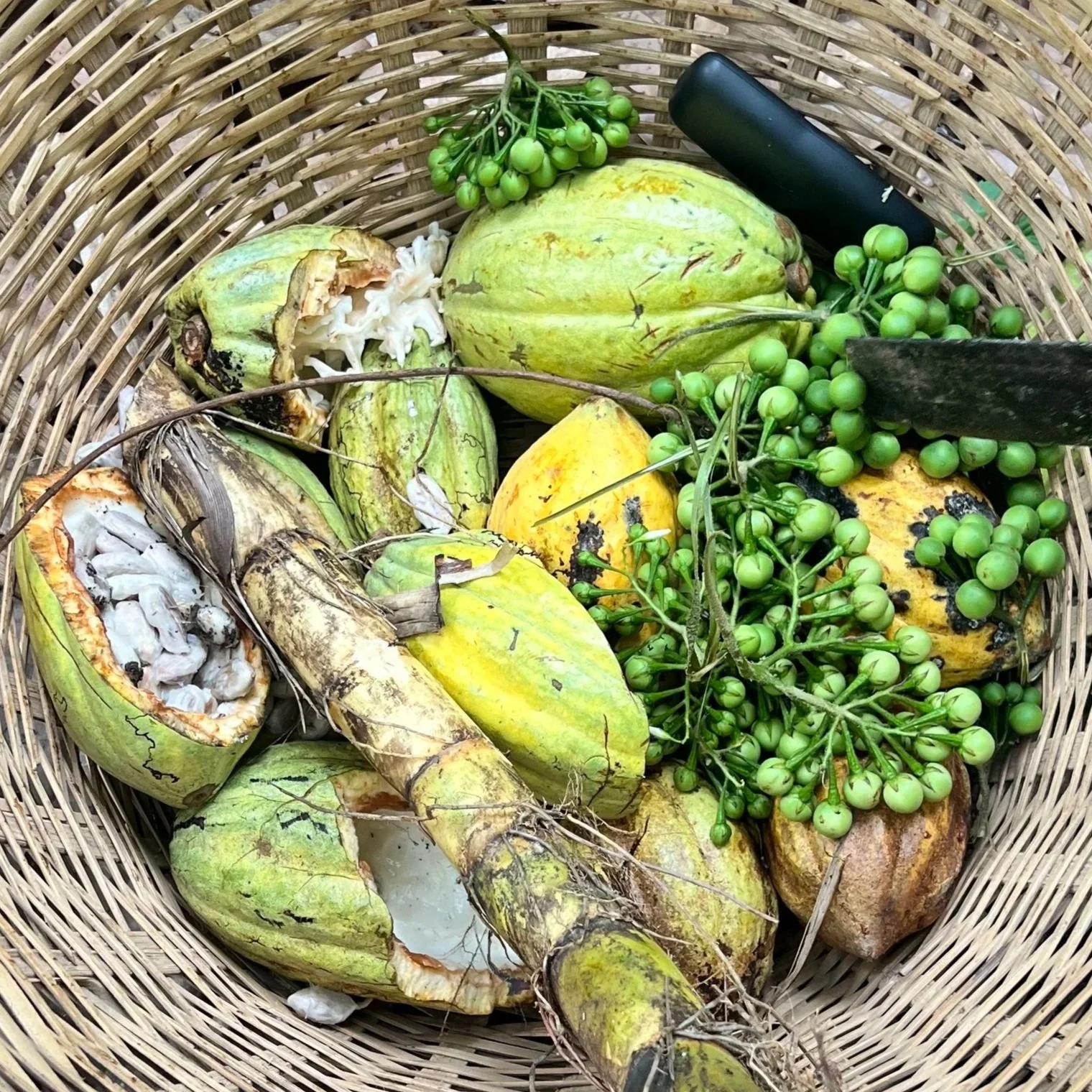
Split pods and the seeds we put back. A cocoa farm near Suhum.
What eight cocoa farmers near Suhum taught me about value, and about distance.
The people who grow cocoa count every bean. The industry their work fuels rarely starts from what they say they need.
The seed I almost spat out
Last week I visited a cocoa farm about 45 minutes from Suhum, in Ghana’s Eastern Region, with the team documenting farmers for our installation in London. The farmers harvested a couple of pods for us and cracked one open. The white fruit around the beans is sweet and delicious. Without thinking, I put it in my mouth, sucked the fruit off and spat out the first seed.
Then one of the women stretched out her hand with an empty pod. Put the seeds back in. When we finished with the fruit, every seed went back into that pod, to be taken home and fermented. Even when you are eating cocoa, you do not spit it on the forest floor. Every bean is money.
That’s the moment I remembered. I wasn’t just on a farm in Ghana. I was at the heart of the industry. It is not even about the pod. It is about the beans.
What the farmers need
We sat with eight farmers: men and women, older and younger. We photographed each of them with a different part of their labour and interviewed them in Twi.
What they told us they need is basic. New boots. Better equipment. One farmer never went to school, and cocoa is how he is giving his children a better future. Every one of them is doing this work to support their families.
The distance
Several of the farmers we met rarely eat chocolate or have never tasted it. They know Ghanaians do not really eat it either, and they said that if Ghanaians ate chocolate, it could at least motivate them a little more.
What stayed with me is how separate they are from the industry they supply. They are in their own bubble, doing the work. That work fuels a global industry and all the politics around it, and very little of that conversation reaches them under the trees.
Why their voices are going to London
Commodity/Couture, our installation at 1-54 Contemporary African Art Fair, is built around one brass cocoa pod. Around it are the sound of the farm, the smell of cocoa and the farmers’ voices recorded on this visit. It is a Special Project at Somerset House, London, from 16 to 18 October.
A visitor’s book lets people write back to the farmers. Information in the cocoa chain usually flows one way. This is one small way to send some of it back.
What this means for institutions
Cocoa buyers and chocolate brands: Start sourcing conversations from what farmers say they need and what their goals are. That is the difference between a season worked well and a season worked hard.
Development finance: Fund listening at the farm before program design. Programs designed without the farmer’s own list of needs will miss the basics.
Cultural institutions: Bring producers’ voices into the room, not just images of their work. Distance closes when people hear the person, not only see the product.
Call Forward
If you are a sourcing lead, a funder or a cultural institution trying to put value back where it is made, that is the work I do. 👉🏾 Work with me.
Weekly letters on food, inheritance and power at origin: Substack