What Ghanaian Cocoa Is Called, and What That Costs
Classification is not description. It is a pricing mechanism, and West African cocoa was left outside it.
Every sourcing team working in West Africa has a line item for farmer income and a separate line item for compliance. Very few have anything at all for classification, which is the thing quietly setting the ceiling on both.
Ghanaian cocoa is handcrafted at every stage of its production and reaches the world classified as raw material. That is not a complaint about recognition. It is a description of how the price is arrived at, and it explains why interventions at the farmgate keep delivering less than their budgets promise.
What Happens Before the Bean Leaves Ghana
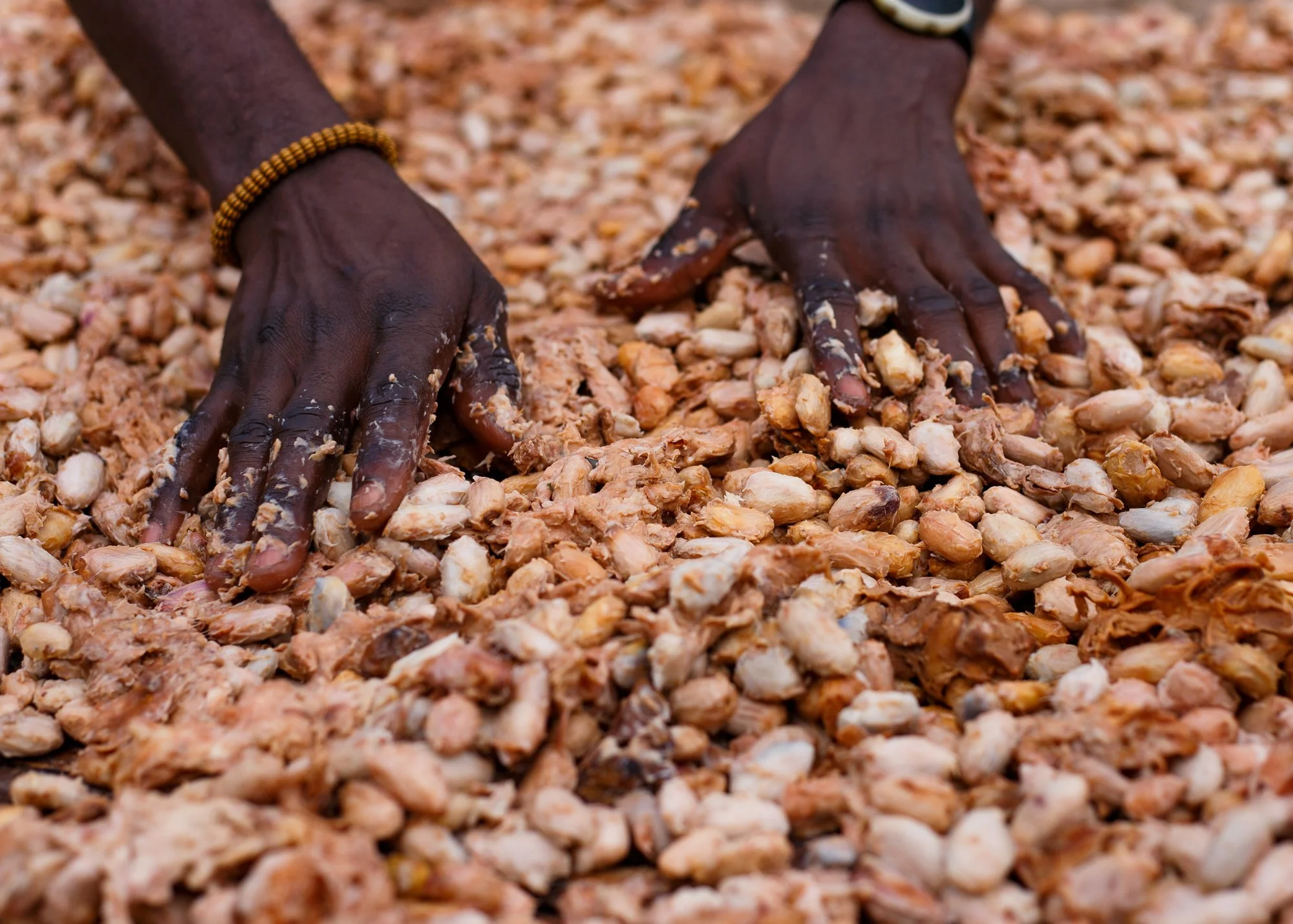
The pods are plucked from the trees by hand. Collected by hand. Cracked open by hand. Fermented by hand between plantain and banana leaves, then laid out in the sun to dry.
In Brazil, to pick one example, much of that same process is mechanized.
Both arrive at market under the same classification, priced against each other as though what happened inside them were the same event.
In 2022 I was invited to speak at the European Cocoa Association's meeting on cocoa from the perspective of someone from a producing country. The talk was called The Future of Chocolate. What I said there has not changed: we cannot compare apples to mangoes. There is beautiful craftsmanship in the beans coming out of Ghana and Côte d'Ivoire, and putting them next to mechanized beans does not do justice to what is being created here.
This is why the word commodity, applied to this product, is wrong.
The Naming Sets the Floor
Naming looks like a matter of respect. It is not. It is infrastructure.
A designation with legal or cultural protection behind it does three things at once. It fixes what the product is, it fixes who may call it that, and it creates a value that a buyer can be asked to pay against. Where those protections exist in agriculture, the price responds. Where they do not, there is nothing for a premium to attach to.
West African cocoa has no such designation carrying pricing power. And in Ghana the channel is singular: licensed buying companies collect from farmers, but every bean is sold on to the Ghana Cocoa Board (COCOBOD) at a price COCOBOD determines, and COCOBOD alone exports. It remains illegal to purchase beans from a farmer directly, including for a Ghanaian chocolate maker operating inside Ghana.
A product with no protected name and one legal channel has nothing to price against. This is the structural reason farmgate programmes underperform. You cannot lift the floor of something that has not been permitted a floor.
Sankofa as a Sourcing Position
We have a symbol in Ghana, one of the Adinkra symbols. Sankofa. Go back and get it.
That is the position I would work from with any company that comes to me wanting to do better. Invest in farmers. Build the partnerships rather than the audit trail. On the farms that already exist, good agricultural practices and new technology can raise yield by up to 75 percent with no new forest cut, which means the productivity case and the deforestation case are the same case, held by the same people, on land already under cultivation.
None of it travels far while the vocabulary stays where it is. Food is a puzzle. You cannot fix one piece, force a solution, and expect the rest to fit around it.
What This Means Institutionally
For cocoa buyers and origin brands
Classification belongs on the risk table beside price and volume. A supply base with no protected designation has no mechanism to absorb a premium, however well intentioned the programme.
Ask what your sourcing communications already claim about craft, and whether your contracts pay for it. If the language is doing work the price is not, that is a marketing expense.
Partnership at origin means a contract a farmer can plan against, not a certification a buyer can display.
For development finance
Farmgate income interventions inside a fixed-price single-channel structure are working against the mechanism, not with it. Fund the structural question or expect the same result at the next evaluation.
Yield improvement on existing farms is the cheapest available climate and income intervention in this sector. It is also the least funded, because it produces no new asset to photograph.
For cultural institutions
The processing knowledge described above is craft practice by any standard applied to any other food. It has never been documented as such, and the people holding it are ageing.
Framing this work as heritage invites preservation. Framing it as craft invites valuation, and valuation is what the producing communities actually need.
Call Forward
The sector does not lack sustainability programmes. It lacks anyone willing to examine what the product is called before designing around the price.
If you are building a cocoa sourcing or landscape programme and you want the structure examined before the brief is finalised, that is the work I do.
👉🏾 Work with me
Weekly letters on food, memory and power at origin: Substack